 Rubyv8.1INTERMEDIATE
Ruby on Rails
Ruby on Rails cheat sheet with MVC architecture, Active Record, routing, migrations, controllers, and deployment code examples.
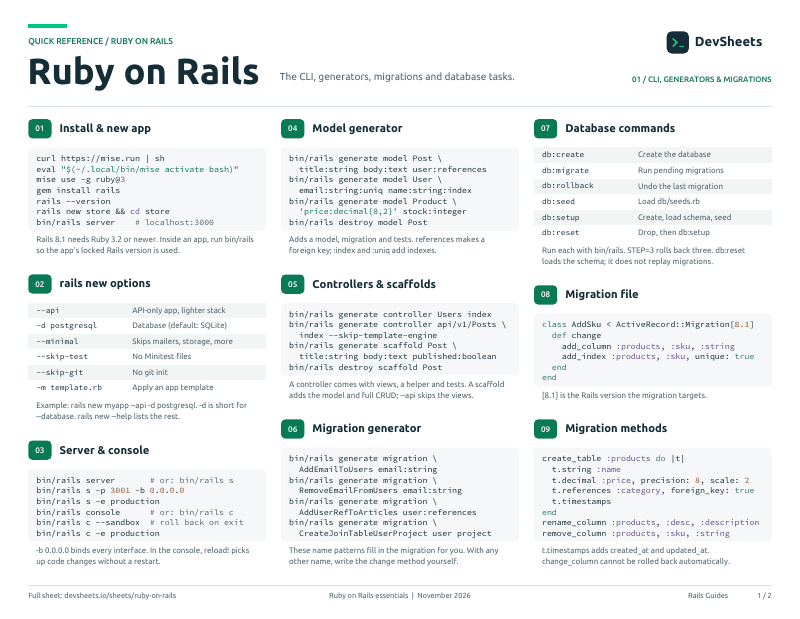
PDF · 2 pages
Ruby on Rails PDF cheat sheet
A two-page Ruby on Rails reference for printing or offline use.
Setup
Install Ruby and Rails, verify both versions, and create an application.
Install Ruby with Mise, add Rails, and generate a new application.
# Install Mise, activate it, then install Ruby 3
curl https://mise.run | sh
eval "$(~/.local/bin/mise activate bash)"
mise use -g ruby@3

# Install and verify Rails
gem install rails
ruby --version
rails --versionGetting Started
Create a new Rails application with various options
# Basic app
rails new myapp

# API-only app
rails new myapp --api

# Skip specific components
rails new myapp --skip-test --skip-bundleStart development server and interactive console
# Start development server
rails server
# or shorthand
rails s

# Specify port
rails s -p 3001

# Rails console
rails console
rails cGenerators
Generate models with migrations and attributes
# Basic model
rails generate model User name:string email:string

# Model with references
rails generate model Post title:string body:text user:references

# Model with indexes
rails generate model Product name:string:index price:decimalGenerate controllers with actions and views
# Controller with actions
rails generate controller Users index show new create

# API controller
rails generate controller api/v1/Posts index show --skip-template-engine

# Empty controller
rails generate controller AdminGenerate complete CRUD resource with all components
# Full scaffold
rails generate scaffold Post title:string body:text published:boolean

# API scaffold
rails generate scaffold_controller api/v1/Article \
  title:string body:text \
--apiGenerate standalone database migrations
# Add column migration
rails generate migration AddEmailToUsers email:string

# Remove column migration
rails generate migration RemoveEmailFromUsers email:string

# Create join table
rails generate migration CreateJoinTableUserProject user projectDatabase & Migrations
Create, migrate, and manage database
# Create database
rails db:create

# Run migrations
rails db:migrate

# Rollback last migration
rails db:rollback

# Drop database
rails db:dropCommon methods used in migration files
class CreateProducts < ActiveRecord::Migration[7.0]
  def change
    create_table :products do |t|
      t.string :name
      t.text :description
      t.decimal :price, precision: 8, scale: 2
      t.integer :stock, default: 0
      t.references :category, foreign_key: true

      t.timestamps
    end

    add_index :products, :name
  end
endRoutes
RESTful routes with resources
# Full CRUD routes
resources :posts

# Limit to specific actions
resources :posts, only: [:index, :show]
resources :posts, except: [:destroy]

# Nested resources
resources :users do
  resources :posts
endDefine custom routes and root
# Root route
root 'posts#index'

# Simple route
get 'about', to: 'pages#about'

# Route with dynamic segments
get 'posts/:id', to: 'posts#show'

# Named routes
get 'dashboard', to: 'dashboard#index', as: :user_dashboardControllers
Common controller patterns and responses
class PostsController < ApplicationController
  def index
    @posts = Post.all
    render json: @posts
  end

  def show
    @post = Post.find(params[:id])
    render :show
  end

  def create
    @post = Post.new(post_params)
    if @post.save
      redirect_to @post, notice: 'Created!'
    else
      render :new, status: :unprocessable_entity
    end
  end
endBefore/after/around filters for controller actions
class ApplicationController < ActionController::Base
  before_action :authenticate_user!
  before_action :set_locale
  after_action :log_action
  around_action :catch_errors

  private

  def set_locale
    I18n.locale = params[:locale] || I18n.default_locale
  end
endModels & Active Record
Define relationships between models
class User < ApplicationRecord
  has_many :posts
  has_one :profile
end

class Post < ApplicationRecord
  belongs_to :user
  has_many :comments
end

class Comment < ApplicationRecord
  belongs_to :post
endValidate model data before saving
class User < ApplicationRecord
  validates :email, presence: true, uniqueness: true
  validates :name, presence: true, length: { minimum: 2 }
  validates :age, numericality: { greater_than: 18 }
endQuery database with Active Record
# Find records
Post.find(1)
Post.find_by(title: 'Hello')
Post.where(published: true)
Post.all

# Chain queries
Post.where(published: true).order(created_at: :desc).limit(10)Lifecycle hooks for model operations
class Post < ApplicationRecord
  before_validation :normalize_title
  before_save :generate_slug
  after_create :send_notification
  after_destroy :cleanup_files

  private

  def normalize_title
    self.title = title.strip.titleize
  end
end